

Lymphedema is managed rather than cured — and it can be managed well.
The lymphedema surgery service of Chongqing West District Hospital cares for arms and legs swollen by lymphatic failure: staging and limb volume measurement, compression and lymphatic drainage, physiological operations such as lymphatic-venous anastomosis and lymph node transfer, and debulking surgery for advanced disease — planned honestly, with the full resources of a tertiary general hospital behind it.
Conservative care first. Surgery when it genuinely helps. Compression almost always still needed afterwards.
- Evidence-based care
- Honest about a chronic condition
- Measurement, not guesswork
- Tertiary-hospital safety net
Swelling first, surgery second — and only when it earns its place
Every swollen limb follows the same pathway, whatever the cause and whatever the eventual treatment.
Diagnose & measure
Not every swollen limb is lymphedema. We take a history, examine the tissue, exclude venous, cardiac, renal, and thyroid causes, and record circumference measurements at fixed landmarks so that every later visit compares like with like.
Control the swelling
Compression, skin care, exercise, and lymphatic drainage come first, because they are what actually controls lymphedema. They are not a waiting room before surgery; they are the treatment, and they remain necessary afterwards.
Operate only when it helps
Surgery is considered when properly delivered conservative care has been tried and the limb is still heavy, restricting, or infection-prone. Imaging then decides whether a physiological operation is technically possible — or whether excisional surgery is the better answer.
Specialists within a tertiary hospital
The leadership team of the Plastic Surgery & Aesthetics Medical Center brings together plastic and reconstructive surgery, aesthetic surgery, skin and laser care, and dermatology, with the full safety net of a tertiary general hospital behind every operation.

Shaoliang Wang, MD (王韶亮)
Reconstructive Plastic Surgery · Center Director
Center Director and the lead physician of this site’s lymphedema content; reconstructive and microsurgical practice, complex wound repair, and the surgical care of the swollen limb, with 20+ years of tertiary-hospital experience.
View profile →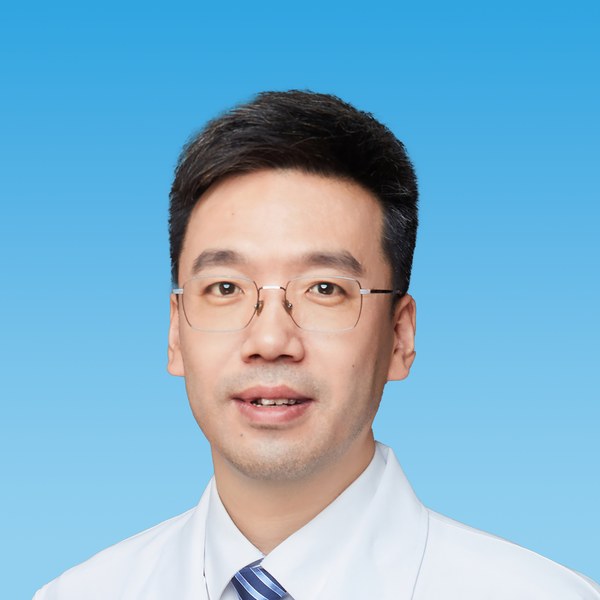
Tongchun Mao, MD (毛彤春)
Aesthetic Surgery · Deputy Director
Deputy Director and head of aesthetic surgery; his role in this service is the appearance and contour side of care — how an operated limb looks and how clothing sits on it.
View profile →
Ke He, MD (何锞)
Skin & Laser Aesthetics · Deputy Director
Deputy Director and head of skin and laser aesthetics; her role in this service is the skin itself — the barrier that keeps infection out of a lymphedematous limb.
View profile →
Yongbo Jia, MD (贾勇波)
Dermatology · Deputy Director
Deputy Director and head of dermatology; his role in this service is the diagnosis and treatment of the skin conditions that complicate a swollen limb, including fungal infection and cellulitis risk.
View profile →Lymphedema, explained honestly
Start with the basics: what lymphedema is, how it is measured, what conservative care does, when surgery helps and when it does not, and what living with a chronic condition actually involves.
What Lymphedema Is
How the lymphatic system works, why protein-rich fluid accumulates in a limb, and the practical difference between primary and secondary lymphedema.
Read the guide →Staging and Measurement in Lymphedema
How lymphedema severity is graded by stage and by limb volume, and how measurements are used to track change over months and years rather than days.
Read the guide →Conservative Management: The Foundation of Lymphedema Care
Compression garments, manual lymphatic drainage, exercise, and skin care: what each does, what the evidence supports, and why every surgical plan still depends on them.
Read the guide →When Conservative Treatment Is Not Enough
How the decision to operate on lymphedema is made: what failure of conservative care actually means, what imaging adds, and who is a realistic candidate.
Read the guide →Lymphatic-Venous Anastomosis and Lymph Node Transfer
The two main physiological operations for lymphedema: joining lymph vessels to small veins, and transferring vascularised lymph nodes, with honest limits on what each achieves.
Read the guide →Debulking and Liposuction for Advanced Lymphedema
What excisional procedures remove, why suction-assisted lipectomy can reduce a heavy limb substantially, and why neither operation cures the underlying drainage failure.
Read the guide →We will not sell you a cure that does not exist
Lymphedema is a chronic condition. No surgeon can promise to cure it, to remove the need for compression, or to make a limb normal again. Anyone who does is not giving you honest medical advice. Our job is to help you understand what treatment can realistically change — and to be clear about what it cannot.
Ready to discuss your lymphedema care?
Reach out for a consultation. We will assess the limb, review what conservative care has achieved, and talk honestly about whether surgery has a role — and what it can and cannot change.
Part of Reconstructive Surgery — 9 sites on this topic